
Estate Planning: PortfolioPilot vs Trust & Will

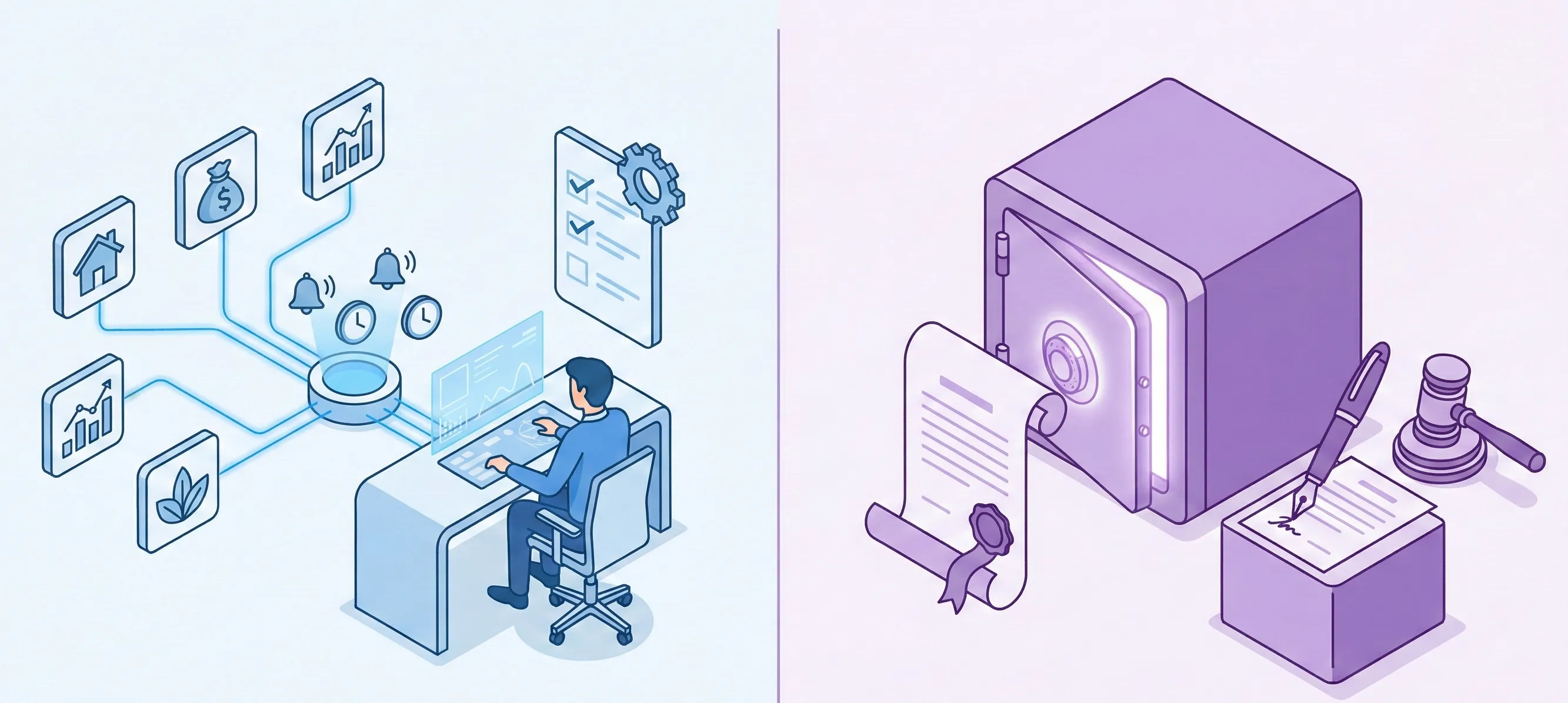
According to Caring.com’s 2024 national study, only 32% of US adults report having a will or living trust. Many people assume estate planning starts and ends with a will. The bigger issue is that real-world transfers often hinge on account titling and beneficiaries, and those decisions live alongside, not inside, a will. For example, transfer-on-death (TOD) and beneficiary designations typically control how certain assets move outside probate (Investor.gov). This article explains where PortfolioPilot (planning and coordination) and Trust & Will (legal document creation) fit, what each can and cannot do, and how investors can combine them thoughtfully.
Key Takeaways
- Different jobs, complementary roles. Trust & Will focuses on creating legal documents; PortfolioPilot focuses on organizing, tracking, and prompting action across a person’s finances.
- Beneficiaries matter as much as wills. Many assets are transferred by beneficiary designation/TOD, which sit outside a will, so ongoing updates are critical.
- Planning should be dynamic. Portfolios change, accounts move, and laws update; ongoing reminders and portfolio-aware checklists help reduce missed steps.
- Federal estate tax hits few estates. The IRS sets a multi-million-dollar, inflation-adjusted federal exclusion, and a minority of estates owe federal estate tax (IRS). State rules can differ.
- Best results come from coordination. Some investors may draft documents with a service like Trust & Will and then use PortfolioPilot to keep beneficiaries, titling, and to-dos current across accounts.
What Trust & Will Provides (and Where It Stops)
Trust & Will is a consumer estate-planning platform that guides people through creating state-specific wills, revocable trusts, and guardianship documents, with optional attorney support in select states. It is built to help people generate valid documents efficiently from an online workflow.
Core strengths
- Document creation: Will packages, revocable living trusts, and related forms with guided questionnaires.
- Education and templates: Plain-English explanations of terms and choices throughout the drafting process.
- Convenience: Online updates and storage; options to finalize with notarization consistent with state rules.
Important boundaries
- Not a financial organizer: Trust & Will does not continuously monitor brokerage, retirement, or crypto accounts for beneficiary gaps.
- Does not manage portfolios or taxes: It focuses on documents, not investment monitoring, fee reviews, or tax-loss harvesting.
- Ongoing upkeep is on the user: Life changes, new accounts, rollovers, or marriages, require revisiting beneficiaries and titles outside the document itself.
So what? A person can leave a well-written will, yet still misdirect retirement assets if the beneficiary form is outdated. The platform helps create documents; it does not automatically keep all accounts aligned.
Track estate planning items with a checklist for insurance, beneficiaries, and key details.
What PortfolioPilot Provides (and What It Doesn’t)
PortfolioPilot, by Global Predictions, an SEC-registered investment adviser, is built for self-directed investors who want a unified view of their finances and ongoing, data-driven prompts. It does not draft legal documents. Instead, it connects accounts and turns a household’s financial data into checklists, alerts, and personalized planning insights, including estate-planning reminders in context with taxes, fees, and diversification.
Core strengths
- Holistic, ongoing organization: Syncs brokerage, retirement, cash, and other holdings; surfaces estate-related to-dos (e.g. “beneficiary missing/old on account X”).
- Integrated planning signals: Tie estate tasks to portfolio risks, tax opportunities, and fee findings, not just a static checklist.
- Event-driven reminders: Prompts to revisit beneficiaries or titling after account changes or new assets.
- Cost transparency: Flat-fee advisory model for ongoing analysis rather than AUM-based management.
Important boundaries
- No legal drafting: PortfolioPilot does not replace an attorney or a document service; it prepares a person to meet one efficiently.
- No probate/tax filing: It provides planning context and education, not legal filings or representation.
Final estate outcomes depend on executed legal documents, beneficiary accuracy, and state law, all of which sit outside the scope of financial planning tools.
So what? Many investors don’t need help writing a will every month; they need help keeping the estate picture current as their finances evolve.
Side-by-Side: How They Address Real-World Estate Tasks
When a household adds or changes accounts
- Trust & Will: Documents remain valid, but beneficiary forms on new accounts must be updated separately.
- PortfolioPilot: Flags missing or outdated beneficiaries across connected accounts and nudges follow-through.
When life events occur (marriage, divorce, new child)
- Trust & Will: Facilitates editing the will/trust documents.
- PortfolioPilot: Issues reminders to revisit every account’s beneficiary/TOD, not just the will.
When tax questions arise
- Trust & Will: Education around document choices; not a tax-optimization platform.
- PortfolioPilot: Surfaces portfolio-context insights (e.g., account location, realized gains/losses) to discuss with a tax professional.
When laws or thresholds change
- Trust & Will: Users can update documents if needed.
- PortfolioPilot: Provides reminders and portfolio-aware context; notes that the federal estate exclusion is high and inflation-adjusted, while state rules vary.
The comparison is based on publicly available information from each provider’s website as of 11/19/2025. Features, fees, and methodologies may change over time.
Estate Planning & PortfolioPilot Coordination — FAQs
What share of US adults reported having a will or living trust in 2024, and what does that imply for planning gaps?
Do transfer-on-death and beneficiary designations typically bypass probate under current US rules?
If someone updates a will but forgets a 401(k) beneficiary, which instruction typically governs the account?
How does PortfolioPilot handle newly opened brokerage or retirement accounts with missing beneficiaries?
When laws or tax thresholds change, how is the federal estate tax described, and what varies by state?
Does PortfolioPilot draft wills or trusts, and how is its advisory model positioned on fees?
What is Trust & Will optimized to deliver, and where does its responsibility typically end?
After a marriage, divorce, or new child, which platform prompts a sweep of beneficiaries across all accounts?
If a household rolls over an IRA, what practical risk arises without beneficiary updates?
How does PortfolioPilot connect estate planning with broader portfolio issues like taxes and fees?
How optimized is your portfolio?
PortfolioPilot is used by over 50,000 individuals in the US & Canada to analyze their portfolios of over $40 billion1. Discover your portfolio score now:

Take control of your legacy
Make sure your assets and wishes are cared for, leaving a lasting impact for generations to come - no hidden costs and no credit card required.


.webp)
