
Tax Optimization Asset Location: Simple Rules That Add Real After-tax Return

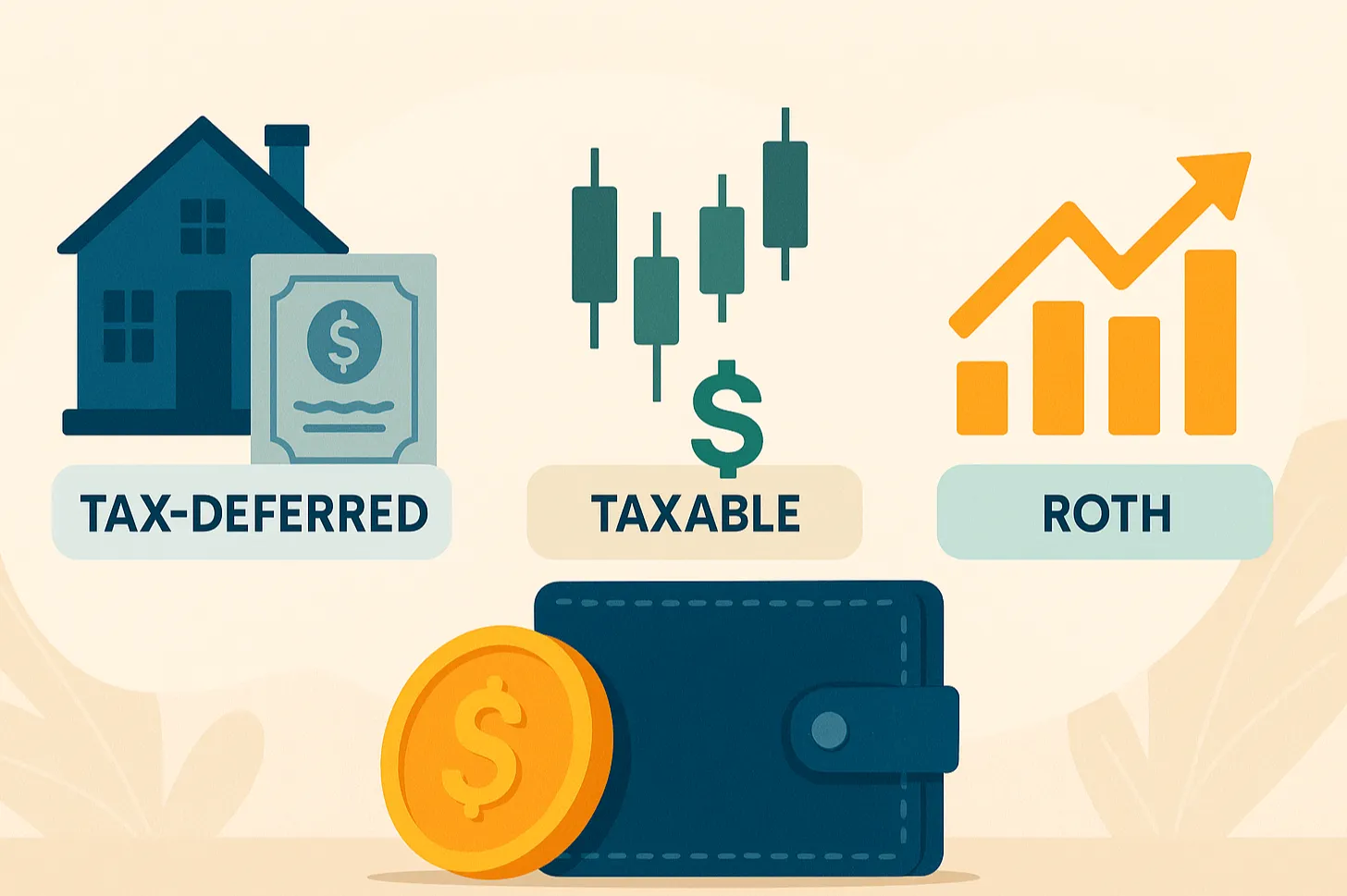
According to the Vanguard, interest is generally taxed at ordinary income rates up to 37%, while most long-term capital gains and qualified dividends face preferential 0%/15%/20% rates. Same market returns, very different take-home results. The common misconception is that “asset allocation” alone drives outcomes; in reality, asset location - which account type holds which asset - often shapes how much an investor actually keeps after taxes. This article explains straightforward placement rules, why they work, and when exceptions apply.
Key Takeaways
- Ordinary-income generators (like most taxable bonds and high-turnover strategies) often create less tax drag in tax-deferred accounts, because interest is taxed at ordinary rates in taxable accounts.
- Tax-efficient equity (broad index equity with qualified dividends and low turnover) is frequently suitable for taxable accounts, where lower capital-gains/dividend rates apply.
- High-growth assets placed in Roth accounts can compound tax-free; Roth employer plans no longer have RMDs starting in 2024, reducing forced-distribution risk.
- The potential benefit of sound asset location has been estimated around a few tenths of a percent annually in some research - helpful, but not guaranteed, implementation, brackets, and fund behavior matter.
Asset location in one sentence
Asset location is the practice of placing assets across taxable, tax-deferred, and Roth accounts to reduce ongoing tax drag - complementing (not replacing) overall asset allocation. It matters because the US tax code treats interest, dividends, and capital gains differently, and those differences compound over time.
Why taxes differ by account type
- Taxable accounts: pay taxes annually on interest, many dividends, and realized gains.
- Tax-deferred (traditional 401(k)/IRA): taxes are deferred; withdrawals are generally taxed as ordinary income.
- Roth accounts: contributions are after-tax; qualified withdrawals are generally tax-free, and - starting in 2024 - Roth employer plans have no RMDs.
- The practical implication: the same fund can have very different after-tax outcomes depending on where it sits. (IRS)
Asset location does not change market risk or expected pre-tax returns, but it can materially influence how much of those returns compound over time after taxes are applied.
Analyze tax-loss harvesting scenarios and portfolio-level tax impact.
Three simple placement rules (and the logic behind them)
1) Shelter ordinary-income generators
Most taxable bond interest and many REIT distributions are taxed at ordinary rates in a brokerage account. Housing these in a traditional 401(k)/IRA can reduce annual tax drag while preserving the portfolio’s pre-tax risk/return mix. So what? Lower recurring tax cost can keep more of the yield compounding. (Some investors use municipal bonds in taxable instead; see the “Nuances” section.)
2) Let tax-efficient equity sit in taxable
Broad equity index exposure tends to be relatively tax-efficient: lower turnover, more qualified dividends, and deferrable capital gains. In taxable accounts, these distributions often face lower rates than interest, and ETFs have structural features (in-kind redemptions) that can reduce or defer capital gains distributions, though not eliminate taxes entirely.
3) Give Roth to the long-run growth engines
Some investors reserve Roth space for assets with higher expected growth, because qualified withdrawals are tax-free and Roth assets avoid RMDs (including Roth 401(k)s from 2024 onward). This can increase the share of lifetime gains that may never be taxed, though benefits depend on future tax rates and risk tolerance.
Nuances that can flip the script
Rules help, but context rules.
- Municipal bonds: In taxable accounts, federal tax-exempt interest may make munis more compelling for some brackets; the right choice depends on taxable-equivalent yield and state taxes.
- International equity and foreign tax credit: Holding certain foreign-stock funds in taxable can allow investors to claim a foreign tax credit on eligible taxes paid abroad, which generally isn’t available in tax-deferred accounts. (Eligibility and limitations apply.)
- Active strategies and factor funds: Higher turnover can increase distributions; placement choice can change with manager behavior year to year. Vanguard
- Menu constraints: Employer plans sometimes limit bond/equity choices; asset location should work within those menus rather than chase purity.
Hypothetical: a simple, realistic reshuffle
Setup: A 38-year-old has $250,000 in a taxable brokerage (60% broad U.S./international equity index, 40% intermediate taxable bonds), $180,000 in a traditional 401(k), and $40,000 in a Roth IRA. They’re in a 32% marginal bracket for ordinary income; long-term capital gains/dividends fall at 15%. This example is hypothetical and for illustrative purposes only
What changes: Without altering the overall 70/30 stock-bond mix, they shift most taxable bonds into the 401(k) and move equivalent equity into taxable, and reserve the Roth IRA for equity.
Why it matters:
- In taxable: dividends and any realized gains from broad equity index funds generally face 15% rates; ETFs often distribute fewer capital gains due to in-kind redemptions.
- In 401(k): interest accrues without current taxation; withdrawals are taxed later as ordinary income.
- In Roth: future qualified gains are not taxed, and there are no RMDs.
Depending on yields, turnover, and future tax rates, this kind of reshuffle has produced modest after-tax improvements in some studies - commonly framed as a few tenths of a percent per year - though results vary and are not assured.
Common myths - gently corrected
- Myth: “ETFs never distribute capital gains.”
Reality: Many equity ETFs rarely distribute gains, but not never - it depends on flows, index changes, and portfolio changes. - Myth: “Asset location adds 1%+ like clockwork.”
Reality: Research typically shows smaller, bracket-dependent benefits; 10–30 basis points is a common order of magnitude in some scenarios, not a guarantee.
A simple practice beats a perfect spreadsheet: pick a placement rule, stick to it, and rebalance with an eye on taxes - small, repeatable wins compound.
Asset Location & Bond Taxation — FAQs
How are interest payments from taxable bonds usually taxed in the U.S.?
Why does asset location matter beyond asset allocation?
What tax advantage do Roth employer plans gain starting in 2024?
How much annual benefit has research estimated from sound asset location?
Why are broad equity index funds often placed in taxable accounts?
How do ETFs achieve greater tax efficiency than mutual funds?
Why are Roth accounts often used for high-growth assets?
How do municipal bonds change asset location considerations?
What role does the foreign tax credit play in asset location?
How can employer plan menus affect asset location strategy?
The following article is provided for educational purposes only and does not constitute personalized investment, tax, or legal advice. Any examples are hypothetical and for illustrative purposes only. Investing involves risk, and outcomes may differ materially from any projections or scenarios discussed. Readers should consult with a qualified financial, tax, or legal professional regarding their individual circumstances
How optimized is your portfolio?
PortfolioPilot is used by over 50,000 individuals in the US & Canada to analyze their portfolios of over $40 billion1. Discover your portfolio score now:

PortfolioPilot users saved $93M on taxes in 2025 (as of November 14, 2025)
It’s simpler than you think. In just 5 minutes, you can find out if there are any tax-loss harvesting opportunities available in your portfolio.11