Tendi Alternative for Comprehensive Wealth Management

Wealth management tools come in many forms. Some focus on simplicity, others on analytics. According to a 2023 CFA Institute brief, 65% of U.S. Gen Z investors typically manage their investments or make trades using investing apps. But what many overlook is the difference between platforms that show you your balance and those that help you plan your financial future.
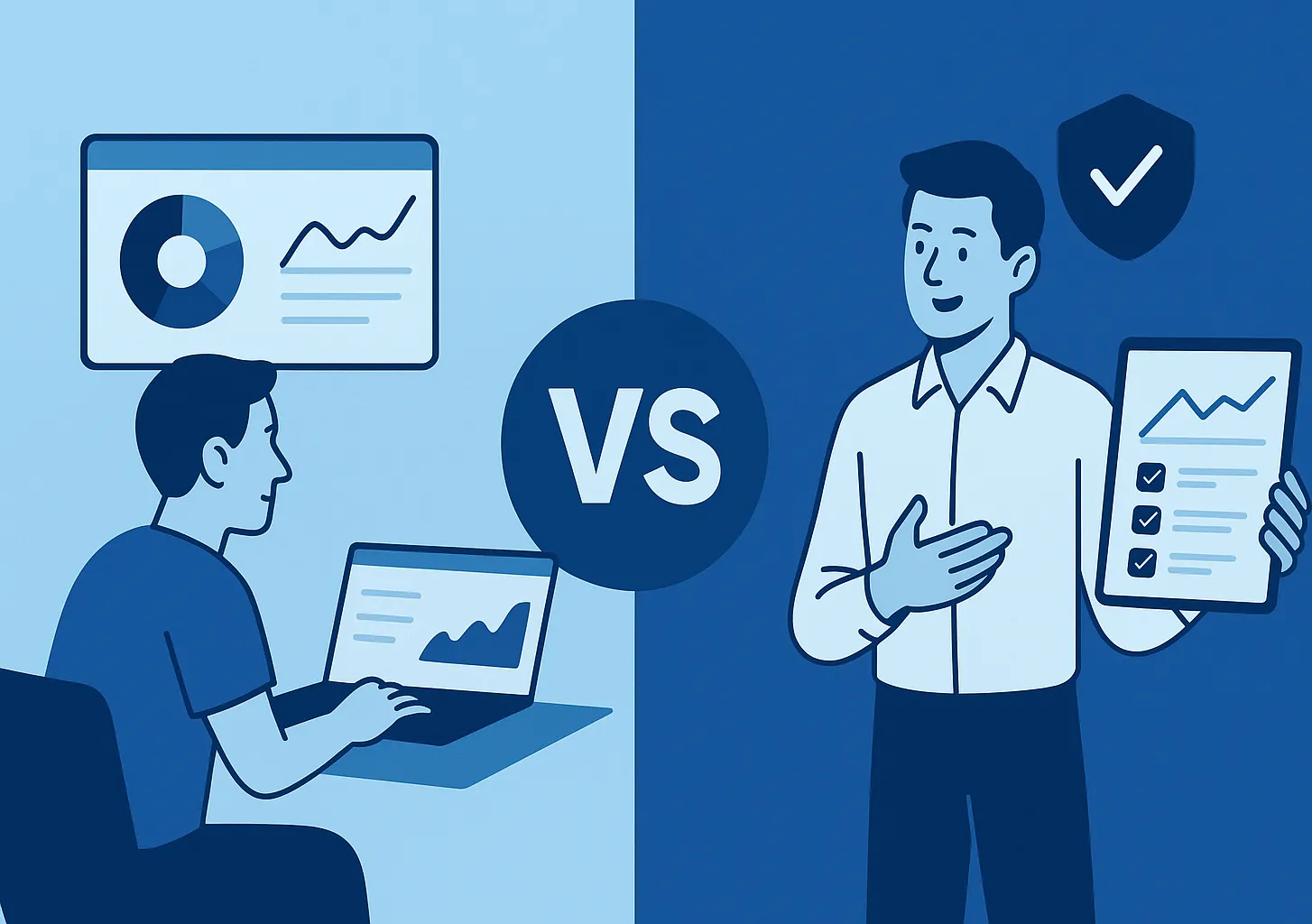
This article compares Tendi, a data visualization platform, with PortfolioPilot, an SEC-registered AI advisor. The goal is not to suggest one is universally “better,” but to show how each platform serves a distinct type of user.
Key Takeaways
- Tendi focuses on visualization, not advice. It displays asset data but does not provide guidance or forecasts.
- PortfolioPilot is built for decision support. It provides personalized analysis, tax-aware insights, and forward-looking modeling.
- Regulation matters. PortfolioPilot operates as a registered investment advisor, while Tendi does not—meaning their roles and obligations differ significantly.
- Different users, different goals. Tendi may suit those who want a clean dashboard, while PortfolioPilot is geared toward investors who want structured planning and transparency. Platform capabilities and regulatory obligations differ based on business model and registration status.
What Tendi Offers
Tendi’s main strength lies in its simplicity. The platform is designed to:
- Pull in data from multiple accounts
- Present net worth in a clear, visual format
- Track performance of traditional and alternative assets
For many users, this feels refreshing—less complexity, more clarity. However, the trade-off is that Tendi does not provide personalized advice. Since it is not a registered investment advisor, it cannot issue recommendations or tailored strategies.
This means a Tendi user sees “what they own” but not necessarily “what to do next.”
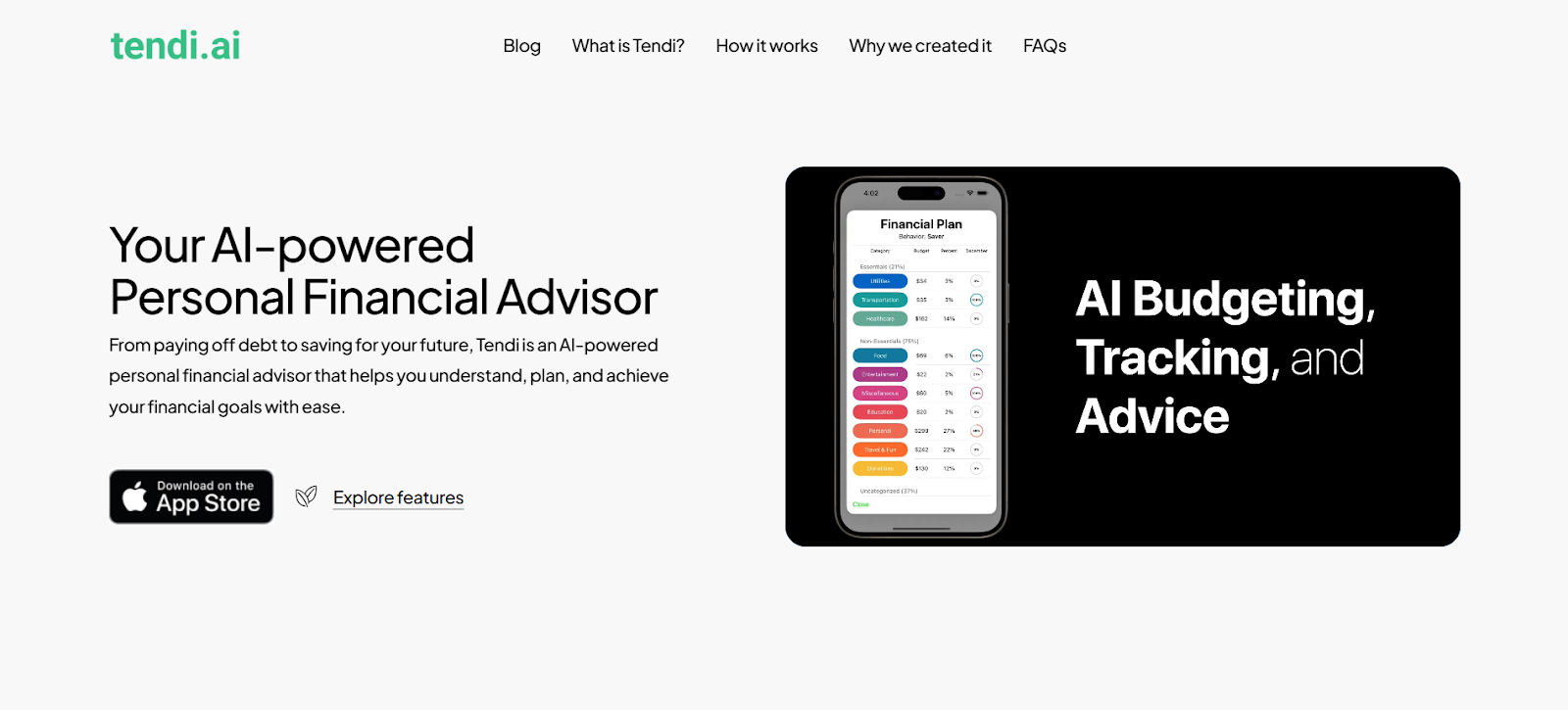
- Note: On its homepage (see image below), Tendi describes itself as an “AI-powered personal financial advisor.” However, Tendi is not registered with the SEC as an Investment Advisor and so is likely not allowed to give advice. We're not quite sure how they handle this issue.
Manage allocation, diversification, and risk exposure across holdings.
What PortfolioPilot Adds
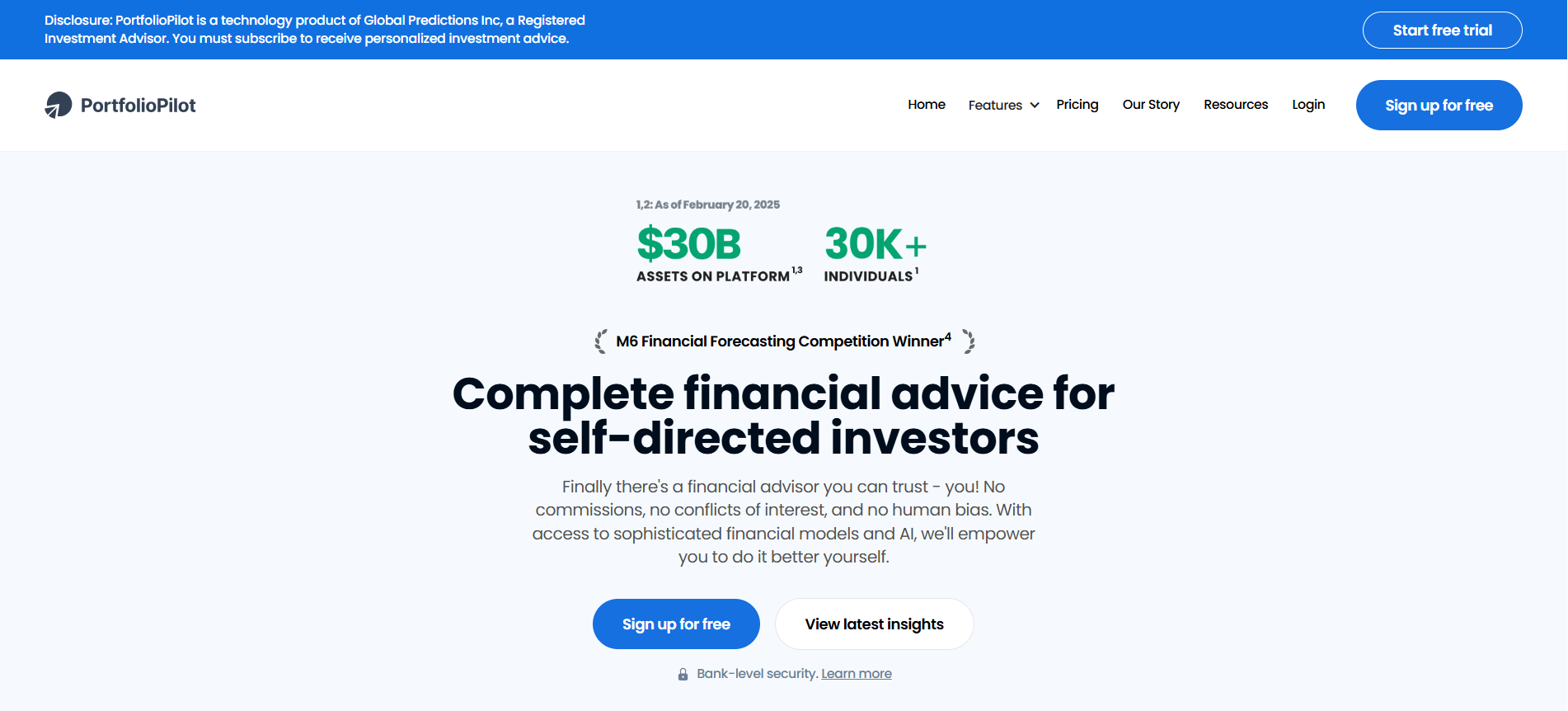
PortfolioPilot was built for self-directed investors who want more than static dashboards. Its features go beyond visualization to support real financial decisions.
Key capabilities include:
- Analysis: Automatic detection of concentration risk, fee drag, and diversification gaps.
- Scenario Modeling: Stress testing portfolios against inflation, interest rates, or retirement spending needs.
- Tax-Aware Planning: Simulating outcomes with tax-loss harvesting or asset location strategies.
- Regulated Guidance: As an SEC-registered investment advisor, it may provide personalized recommendations to advisory clients on a subscription basis
Where Tendi organizes information, PortfolioPilot interprets it—helping users align portfolios with long-term goals.
At-a-Glance Comparison
| Feature | Tendi (Visualization Tool) | PortfolioPilot (AI Advisor, SEC-Registered) |
|---|---|---|
| Primary Focus | Data visualization and net worth tracking | Portfolio analysis, planning, and tax-aware insights |
| Regulatory Status | Not a registered investment advisor | SEC-registered investment advisor |
| Investment Tools | Displays balances and performance | Risk analysis, scenario modeling, tax planning |
| Personalization | Generic dashboards | Data-driven, tailored insights |
| Business Model | Subscription-based or freemium, non-advisory | Subscription-based, no commissions or product sales |
Choosing Between Tendi and PortfolioPilot
For some users, Tendi’s straightforward interface may be enough—especially if the goal is simply to keep assets organized in one place. But for investors who want to understand the implications of their portfolio—taxes, retirement projections, concentration risks—PortfolioPilot provides an extra layer of analysis.
The difference ultimately comes down to this: Tendi answers “What do I have?” while PortfolioPilot helps illustrate “What does it mean for my future?”
Wealth tools are not interchangeable. Choosing a platform should depend on whether the goal is seeing numbers or making informed decisions with them. Investors who want clarity on future risks and opportunities may benefit from the structured insights of a regulated advisor like PortfolioPilot.
Tendi vs PortfolioPilot — FAQs
What percentage of U.S. Gen Z investors primarily use investing apps to trade or manage money?
How does Tendi’s role differ from a registered investment advisor in terms of obligations?
Does Tendi provide tax planning or projections for retirement income?
What types of risks can PortfolioPilot automatically detect in a portfolio?
How does PortfolioPilot simulate the impact of inflation on portfolios?
Why does regulatory registration matter for wealth platforms?
Can Tendi display alternative assets alongside stocks and bonds?
What differentiates visualization from decision support in these platforms?
How does PortfolioPilot generate personalized recommendations without commissions?
In what way do the platforms handle personalization differently?
What is meant by “fee drag” in the context of PortfolioPilot analysis?
Does Tendi provide forecasts of portfolio growth or market conditions?
How might PortfolioPilot’s tax-loss harvesting simulation help investors?
What is the core trade-off between Tendi and PortfolioPilot?
How do business models differ between the two platforms?
Can Tendi highlight overconcentration in a single stock or sector?
How does PortfolioPilot address retirement planning differently from Tendi?
What gap does PortfolioPilot fill that many visualization apps overlook?
How optimized is your portfolio?
PortfolioPilot is used by over 50,000 individuals in the US & Canada to analyze their portfolios of over $40 billion1. Discover your portfolio score now:

Analyze your entire net worth
360° portfolio analysis, AI Assistant, and personalized recommendations guided by our Economic Insights Engine.