Common Mistake #36: Harvesting a Tax Loss - Then Leaving the Cash Idle

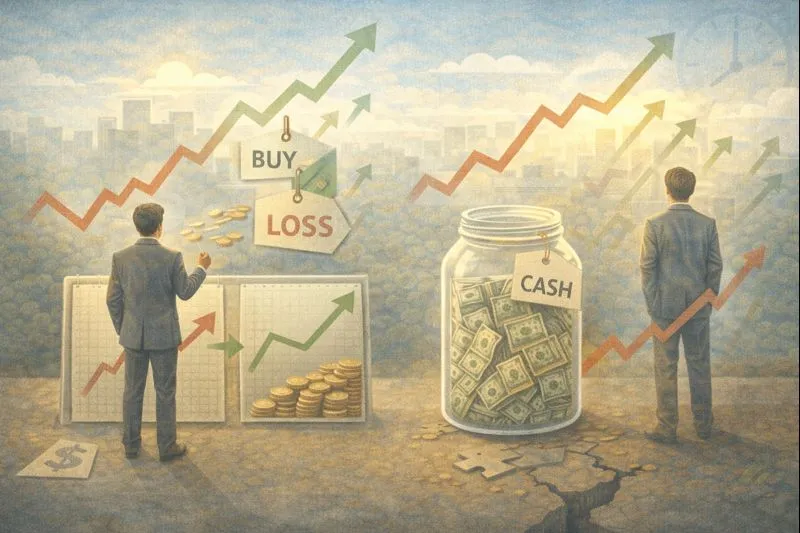
Tax-loss harvesting is often framed as a tax win. An investment is sold at a loss, taxes are reduced, and the investor feels proactive. But in practice, a surprising number of investors stop halfway. They realize the loss - and then do nothing with the proceeds.
This article explains why harvesting a tax loss without reinvesting is a common follow-on mistake, how it undermines the intended benefit, and why staying out of the market can quietly cost more than the tax savings themselves.
Key takeaways
- Tax-loss harvesting is incomplete without reinvestment.
- Sitting in cash introduces opportunity cost, not safety.
- The tax benefit is fixed; missed market exposure is not.
- Market recoveries often begin while uncertainty remains.
- Execution matters as much as the tax rule itself.
Why pausing after a sale feels sensible
After selling at a loss, hesitation feels justified. Markets may still feel unstable. Reinvesting immediately can feel rushed-or even careless. Holding cash feels like a neutral pause, a way to avoid making a second mistake.
There's also a sense of closure. The loss has been "handled. .Taxes have been addressed. The hard part feels done.
Up to this point, nothing feels inefficient. It feels cautious.
That's why this mistake is so easy to make.
Here's the part that the strategy depends on
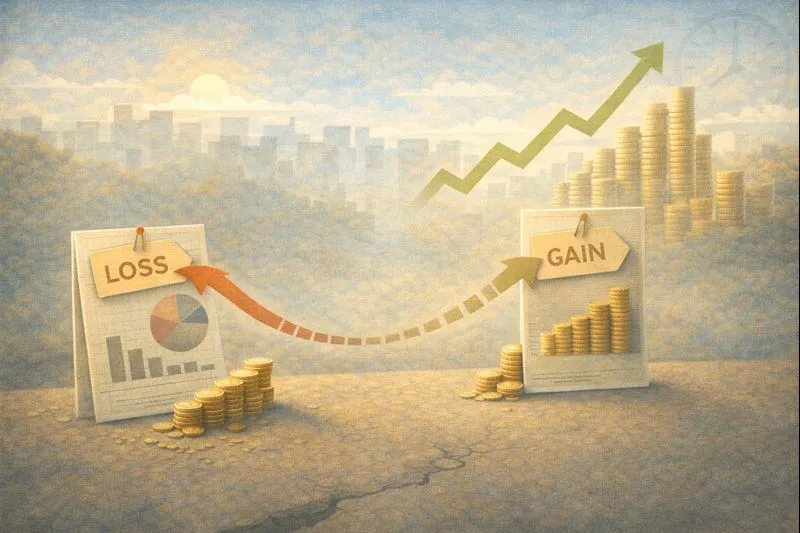
Tax-loss harvesting is not just about realizing a loss. It's about maintaining market exposure while capturing a tax benefit.
The tax savings are finite. The market opportunity is not.
So what? Every day spent in cash after harvesting is a day the strategy isn't fully working.
This is where a tax tactic quietly turns into a timing decision.
This is where the benefit starts to erode
Hypothetical example: Imagine an investor who sells a position during a market downturn to harvest a loss. The proceeds sit in cash while markets remain volatile. Weeks later, prices rebound sharply.
The tax benefit is unchanged. The missed exposure is permanent.
The result isn't obvious from a statement. The portfolio didn't lose money. It simply participated less in the recovery.
This is how a tax-efficient move becomes return-inefficient.
Why market recoveries make this costly
Market recoveries rarely wait for clarity. Historically, strong rebound days often occur when sentiment is still fragile and headlines remain negative. Waiting for "stability" can mean waiting until prices are higher.
The irony is that tax-loss harvesting opportunities tend to arise during volatility - exactly when reinvestment feels least comfortable.
That discomfort is the trap.
The strategy works only if exposure is restored, not avoided.
Why does this mistake persists
Several forces push investors toward inaction after harvesting:
- Fear of re-entering too soon
- Confusion around wash-sale rules
- Desire to "see what happens next"
- Emotional fatigue after realizing a loss
Behavioral research shows that people often gravitate toward single, decisive actions when faced with complex or sequential choices, because multi-step processes impose higher cognitive costs and increase decision friction. In investing, this tendency makes tax-loss harvesting feel like the decisive action worth taking, while the follow-through of reinvesting can feel optional and is thus frequently deferred.
The reframe that preserves the strategy
Investors who avoid this mistake often adopt a simple reframe:
Tax-loss harvesting is a substitution, not an exit.
This reframing keeps the focus on exposure, not avoidance.
Supporting considerations-such as identifying acceptable replacement investments or understanding wash-sale restrictions-exist to guide execution, not to delay it.
The goal isn't trading more. It's staying invested.
When Holding Cash May Still Be Intentional
There are situations where holding cash temporarily is deliberate - such as meeting near-term expenses or adjusting overall risk.
The distinction, consistent with the rest of this series, is intent.
Leaving cash idle becomes a mistake when it's an unintended side effect of harvesting, rather than a conscious allocation decision.
Tax strategies don't work in isolation. They work inside portfolios.
How optimized is your portfolio?
PortfolioPilot is used by over 40,000 individuals in the US & Canada to analyze their portfolios of over $30 billion1. Discover your portfolio score now:

PortfolioPilot users saved $11M+ on taxes in 2024
It’s simpler than you think. In just 5 minutes, you can find out if there are any tax-loss harvesting opportunities available.11