
Common Mistake #5: Overleveraging With Margin (Borrowing to Invest)


Leverage magnifies outcomes. According to FINRA, margin investing can amplify gains - but it also magnifies losses and introduces risks that don't exist in fully funded portfolios. Despite this, many investors view margin as a temporary boost rather than a structural exposure.
This article explains why overleveraging through margin is a common but underestimated mistake, how it changes the rules of investing under stress, and why borrowing to invest often fails for reasons unrelated to market direction.
Key takeaways
- Margin amplifies losses faster than it amplifies gains.
- Leverage introduces forced selling risk during volatility.
- Interest costs quietly raise the performance bar.
- Margin risk compounds with behavioral pressure, not just price movement.
- Borrowing to invest changes when decisions are made - not just outcomes.
Why borrowing to invest can feel efficient
On paper, margin investing looks rational. Borrowing allows an investor to increase exposure without committing additional cash. If markets rise, returns appear enhanced. The math feels straightforward.
This logic is reinforced during calm markets. Volatility is low. Account balances rise. Interest costs feel manageable. Leverage appears controlled.
Up to this point, nothing looks reckless.
That's exactly why margin risk is often underestimated.
Here's the constraint most investors don't factor in
Margin doesn't just magnify returns. It removes flexibility.
Unlike fully funded investments, leveraged positions operate under external rules: maintenance requirements, margin calls, and liquidation thresholds. When markets fall, these rules activate regardless of the investor's long-term view.
So what? Losses don't need to be permanent to cause permanent damage.
This is the critical distinction many investors miss: margin introduces timing risk, not just market risk.
This is where leverage quietly breaks long-term plans
Hypothetical example: Imagine an investor using margin during a strong market to boost returns. A sudden downturn pushes account equity below required levels. The broker issues a margin call.
The investor faces a choice:
- Add cash immediately, or
- Sell assets - often during the downturn
If cash isn't available, positions are reduced at depressed prices. The investor may agree with the long-term thesis, but the decision is no longer optional.
This is where leverage stops being a strategy and becomes a trigger.
Why interest rates change the equation more than expected
Margin borrowing is not free. Interest accrues continuously, raising the hurdle rate required just to break even.
When borrowing costs approach or exceed mid-single digits, the margin between expected returns and guaranteed costs narrows sharply. Even modest volatility can overwhelm the intended benefit of leverage.
The issue isn't whether markets can outperform borrowing costs. It's that returns are uncertain while interest is not.
This asymmetry makes margin risk far more structural than it first appears.
Borrowing to invest is not a static decision. The cost of leverage changes over time, often in ways that materially alter the risk-reward equation.
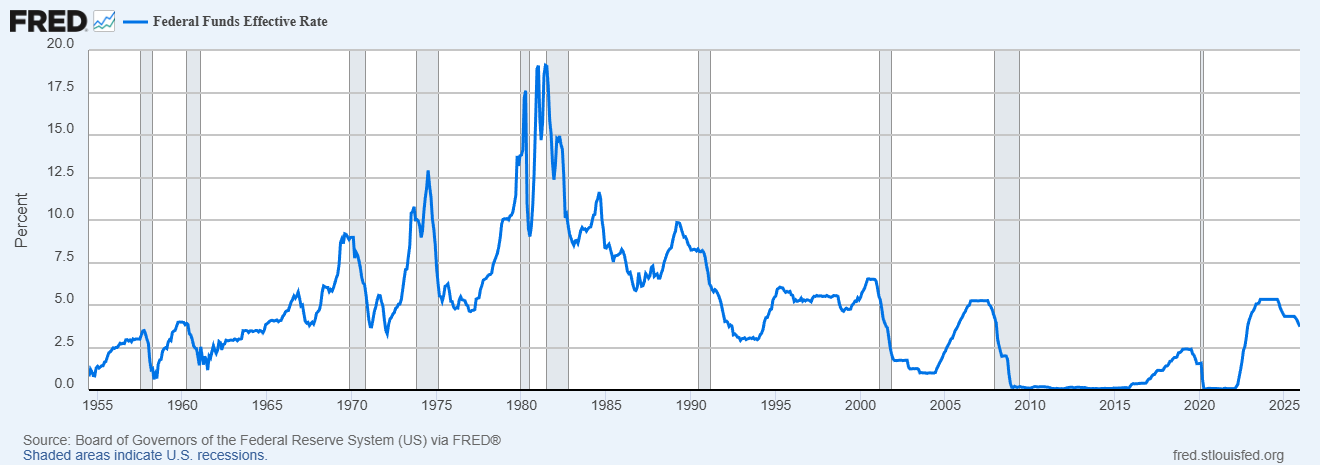
When borrowing costs rise, the margin for error narrows. Market returns remain uncertain, but interest expenses are guaranteed, making leverage far more fragile during volatile periods.
Why overleveraging persists despite the risks
Margin rarely fails immediately. Early success reinforces confidence. Gains feel earned. Risk feels managed.
But leverage behaves differently under stress. Volatility spikes. Correlations rise. Liquidity tightens. The same structure that boosted returns now accelerates losses.
Behavioral finance research shows that forced decisions under stress lead to worse outcomes than voluntary ones. Margin introduces exactly that dynamic.
The danger isn't optimism. It's fragility.
The one boundary that limits leverage damage
Investors who avoid overleveraging often adopt a clear boundary:
Borrowing should never create forced decisions during volatility.
This doesn't prohibit leverage. It defines its limits.
Supporting considerations - such as stress - testing positions for sharp drawdowns, evaluating borrowing costs relative to expected long-term returns, and maintaining ample liquidity-exist to reinforce this boundary, not eliminate risk entirely.
The goal isn't leverage avoidance. It's survivability.
When leverage is used - and when it becomes excessive
Leverage is not inherently reckless. It is used in professional contexts with strict risk controls, diversified income sources, and predefined exit rules. Problems arise when leverage is:
- Used opportunistically rather than structurally
- Paired with limited liquidity
- Dependent on continued market calm
Overleveraging isn't about borrowing; it's about borrowing without room for error.
Margin Investing, Leverage, and Risk — FAQs
Does margin investing always increase risk?
Why are margin calls so damaging?
How do interest rates affect margin strategies?
Is margin risk mainly about market direction?
Why do investors underestimate leverage risk?
Why can small drawdowns trigger outsized damage in leveraged accounts?
What is meant by margin introducing “external rules” into investing?
Why does overleveraging often go unnoticed early on?
How does liquidity affect the survivability of margin strategies?
Why does leverage change when decisions are made, not just outcomes?
How optimized is your portfolio?
PortfolioPilot is used by over 50,000 individuals in the US & Canada to analyze their portfolios of over $40 billion1. Discover your portfolio score now: